Showing posts with label building. Show all posts

Tuesday, May 22, 2012

Bikefucious: A Flat Is Good Team Training

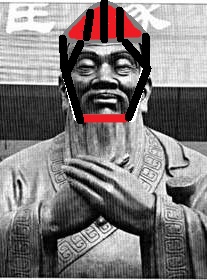
Bad Bikefucius Rendering
PSSssss!  I heard it, looked back from my drops and saw it was my teammate Mark.  “Flat!”  I shouted over the buzz of 30 hubs on Binning, a one-lane beat-up twisting flat farm road famous for chewing up tubes.  It was a pinch flat for sure.  I held up a hand, moved left and eased up to help.  A third teammate, Kris stopped too.  As I look back on the flat, it’d be a great team drill, perfect for a budding team of juniors or a group of mismatched hammer headed masters alike. 

Try this team drill on for size.  Put a cable cutter in your jersey pocket.  At a rest stop with an hour back to civilization, split the team ride into two evenly matched groups.  Tell the 1st bunch they’ll get a 30 second lead and send them out.  Then immediately turn to the 2nd group, snip the valve stem off the fastest person’s front wheel and shout, “Go!” 

Actual Flat Tire Fix
We laid the bikes at the edge of the farm field and tag teamed the flat.  Mark stripped the old tube out.  Kris unraveled the fresh rubber.  Like a 14 year old junior, I man-stared across the field.  Just like Belgium, for every one mile of road, two miles of ditches.  In a few months we won’t be able to see above the corn.  Mark woke me out of my day dream, tossed me the old tube to roll up and began dressing the new one.  Diagnosing it as a pinch flat and not debris saved us time.  Kris aired it up as I stuffed the old tube in Mark’s saddle bag.  We were off in a respectable 3-4 minutes. 

Cincinnati's Binning Road Rendering
Changing a flat quickly is half the battle.  Now you need to try and close a 3-4 minute gap in an hour.  Not that blazing group rides aren’t fun, but I love me some good team paceline and the challenge of the chase.  The strongest rider pulls longer not harder.  Hands on the drops, backs flat, we traded even pulls the whole way back.  Elbows flicked and the momentum flowed forward.  No one got gapped off crossing the railroad tracks.  Instead of fighting for air in pursuit of a KOM, we gauged each other’s efforts and kept the group together up the last climb.  As we crested, we could make out a rider turning left ¾ of a mile down the road, almost there, but not quite.

Ten minutes later, we turned the corner into the shop lot.  The other guys still hadn’t taken off their helmets.  They must have just stopped, and were sitting on their top tubes chatting.  While we didn’t close it down completely, we probably weren’t more than 1-2 minutes off the pace.  When you look at it upside down, if the flat cost us 4 minutes, we still took 2 minutes back from the fastest guys in town. 

Bikefucious say: only when you fall back can you move forward.  Teach a team to close a gap and you’ll give a team confidence to bust a breakaway.

Thursday, April 22, 2010

Earth Day Schmirth Day

Earth Day, what a bunch of hooey.  It’s just another Hallmark holiday to me, not any different than Valentine’s Day.  My wife and I don’t exchange cards or gifts on Valentine’s Day, even though it is in fact the anniversary of my proposal.  It’s Earth Day and the Earth shouldn’t expect anything extra from me today.  If you have a good relationship everyday should be as love filled and celebrated as Valentine’s Day.  If you really care about the environment, everyday should be Earth Day.  If the green websites and NBC logos are making you feel a little guilty about it, I guess it never hurts to put a little more umph into “doing your part” for fat mama earth today.  There's no such thing as too much of a good thing for Earth Day.  (Pictured: beautiful El Yunque National Forest-Puerto Rico)

Earlier today I updated the status of The Best Bike Blog Ever*’s Facebook page.  It read, “Happy Earth Day.  Do your part.  Pick up a piece of trash or two on your ride today.”  I had an early meeting and rushed it.  I wish I thought it out more clearly.  I guess that’s what I’m doing now.  If you’re a cyclist you should be pickin’ up a piece of trash whenever you can no matter what day it is.  I’m not saying to lock up the brakes at the front of the peloton and break a few collarbones to stuff a gum wrapper in your jersey pocket.  Seriously, if you ride a bike, stop at an intersection and see a piece of trash, pick it up and put it in the next recycling or garbage can you see.  It makes the ride that much more enjoyable next time you pass through.

That got me to thinking of other things an everyday cyclist can do to make everyday Earth Day:

DON’T BUY WATER BOTTLES
You should never buy another water bottle again.  No lie.  I have at least 50 of them in my pantry dating back to God knows when.  It’s ridiculous.  If you need one, let me know.  Ask a friend.  Or, take a look around at the next rough railroad track crossing, chances are there’s one lying in the brush.  Trash becomes treasure.  I’ve heard pro tour teams this year are using bottles made from recycled or biodegradable material.  So you don’t have to cringe and wince when you see them whip a bottle into an empty field in a remote part of Spain.  They say at most pro races the fans snatch them up pretty quickly.  However, I don’t recall seeing too many fans in the desert during the Tour of Oman earlier this year.  The next time one jangles out of your cage probably best to go pick it up, unless you have cheering souvenir hunting fans along your training route.  Plus, Karma’s a bitch.

BE GREEN WHEN YOU CLEAN
It was likely brain cell killing toxic and costly, but I used to practically clean my entire bike with degreaser.  Idiot.  Looking back at my carelessness, probably a few gallons of degreaser flowed out of my garage and into the storm sewer or through cracks into the ground.  Now, I drop a rag on the floor under the drive train; spritz a spray or two on the chain cleaner or tooth brush and scrub the drive train only.  When you’re done, you can use that degreaser dripped rag to wipe off your cassette and chainrings.  I’ve heard there are chain cleaners that allow you to recycle the degreaser with a filter.  That’s what the bike shops do, but on a huge scale.  That’s what that big 50 gallon drum in the back of the shop is for.  Degreaser never really loses its cleaning properties.  You can use it more than once.  Like motor oil, it just gets dirty.  The rest of the bike is cleaned with a squirt of dish soap into a recycled spray bottle of water.  We have 5 bikes that are ridden and cleaned at least weekly.  I probably fill up that old circa 2002 409 cleaner spray bottle three times per year.  That’s 3 squeezes of soap for hundreds of bike wipe-downs.  I don’t buy shop rags.  Instead I recycle old t-shirts into rags and use those to clean the bike.  Don’t tell me you don’t have a surplus of hideously ugly t-shirts from charity rides and races.

TRAVEL WITH YOUR BIKE INSIDE THE CAR
Not only will it keep you from littering the drive through at Arby’s with heavy metals and carbon fiber during a run-in with the overhang, it saves a ton on gas.  I’ve tracked the mileage savings.  With my car, there’s probably a 3-4 mpg difference between having a bike on top of the roof as opposed to being inside.  That makes a huge difference when traveling to races or on vacation.  Plus it stays dry, maybe saving a re-lube of the drive train when you arrive at your destination.  Lastly, your bike might be a little more secure locked behind tinted windows instead of advertising to the world that you have an expensive bike.  Of course there’s going to be times when you need the roof rack, hopefully that’s when you’re carpooling with teammates and friends, saving the gas you would’ve burned taking individual cars, and getting lost in the boonies trying to keep the caravan together.

PARTICIPATE IN A TRAIL BUILDING DAY
While it’s fantastic to have new trails and bikeways, I am always surprised by the amount of trash and junk deep in the honey suckle jungle of unused park land.  At Devou Park in Covington volunteers from Give Back Cincinnati carted out literally hundreds of 5 gallon buckets full of ancient whiskey pint bottles, tires, old fencing, tarps, tents, single shoes, and some things that just made us scratch our heads.  So, when you help build a trail, you’re also helping to clean up your local public land, leaving you feeling double happy.

PATCH YOUR TUBES
A Facebook Fan of the blog the other day mentioned that there must’ve been a quarter of a million dollars worth of bikes in the local Cat 3 race this past Sunday, fifty racers on five thousand dollar rigs.  He summarized a lot of the Cat 3 races have decent jobs and can afford a little luxury in their hobby.  Consequently, with wealth comes waste.  No doubt many of these riders simply whip in a new inner tube whenever they flat and toss the old tube in the trash.  I concur; most racers would hate to be sidelined in a race by flatting on a repaired inner tube.  However, for a few years now, I save my flatted tubes for a rainy day tube patching party.  I look forward to the bottle of Sierra Nevada and using up three patch kits.  While I still prefer to run unpatched tubes during races, the spare tube I carry on local training rides is usually a patched one.  Additionally, that makes it pretty easy to lend a tube to someone in need.  What goes around comes around.  

Friday, September 25, 2009

It’s Not About The Barriers: Risk, Reward and the Cyclocross Course

The worst and the best cyclocross courses, I’ve raced them both. While you remember Cyclocross courses for certain features, the difference between a good and bad course rarely comes down to sand pits, log barriers, off cambers or cool hand built flyovers. The great courses offer risk and reward. (pictured above Masters racers take the risk of a fast entry into a 3 wide sand pit at OVCX Gun Club Race, 2008 Milford Ohio)

Cyclocross is much more than a fastest person wins bike race. It’s a mental game pitting skills versus speed. Some of the best courses I’ve raced tempt riders to make hard decisions throughout the course. The choice can be as simple as run it or ride it or as daunting as grabbing a handful of brake or blasting wide-freaking-open. At the OVCX Kingswood course this past weekend, a double barrier was followed by two 180 degree hairpins. Right off the bat, you’re thinking that sucks. It’s a total - everyone goes through slow and single file - choke point, but it wasn’t. The beautiful part of it was that you had to make the first hairpin a delicate fraction of a second after remounting from the barriers. The corner was taped wide. Some riders chose to run the first 180 the first lap and ride the turn on successive laps. Some opted for the longer but less susceptible to carnage outside line. Others tried their skills only to fumble getting clipped in through the turn. Multiple choice, but only one fast answer per lap. Brilliant.

One of my favorite risk/reward course set-ups was the natural double log barriers at the OVCX John Bryan race in 2008. The logs were a bunny-hop-able 10-12 inches thick, separated by a 10-12 yards of grass long enough to land and relaunch for the 2nd log. However, the logs were on a fast straightaway, leaving riders to question whether it was faster to dismount at high speed and run, or slow to hop them. With conditions changing and fatigue setting in over the course of the race, it left a helmet scratching decision every lap. It rewarded strong riders with the skills to risk bunny hopping them every lap. It still rewarded those that could dismount at speed without touching the brakes. It punished those who committed beyond their talents. Now, mentally make those logs 16-18 inches round and roll them within 4-5 yards of each other. Unless you’re the one freak-of-nature in the race that can bunny hop anything, everyone is going to hit the brakes and run the logs. The risk and reward is gone. It wasn't about the logs, but how they were placed in relation to the course and each other.

Don’t get confused; risk/reward in Cyclocross has nothing do to with opening up a course or making it less challenging. It is about choices. Take the Green Monster flyover at the USGP course in Louisville in 2008. It was a behemoth wooden bridge structure with about 10 stairs on one side, a table top, and a ramp down the other. The stairs were tall and shallow. The table top wasn’t more than 2-3 feet longer than a bike. The steep ramp shot you out into a wide fast turn. The structure was wide enough for riders to tackle two abreast. It rewarded those with extremely quick dismount/remount skills combined with technical skills and punished those who hesitated for a split second of indecision or a case of nerves. More than once I saw it cause a gap between a rider with buttoned up skills and someone who had to look down to clip their foot in their pedal. Sure the Green Monster was challenging and an intimidating sight, but it was it's placement on the course that really made it spectacular. Had there been a tight turn at the bottom, riders would've played it a little more safe and never have attacked it as hard as they did.

Risk/reward, in regards to cyclocross courses not only applies to the obstacles, but the little nuances of the course. One of my favorites, while just a mosquito of a detail, is having a section of the course be a little pavement on one side and grass on the other. I’ve encountered this feature number of times and have learned to look for it in my pre-rides. Imagine a grassy stretch leading into a long sweeping corner. However, the corner slightly crosses a paved drive or golf cart path. Experienced riders will know that riding on pavement is faster than grass, so they’d take advantage to stand up and bang out a few hard pedal strokes on the pave. Others simply didn’t see the crumb of advantage right in front of their eyes. The risk: we all know what can happen going from wet grass to smooth pavement. Whoops!

My last example is about adding the element of speed to a course, particularly into and out of obstacles. When you put a tight turn in front of or after an obstacle, it forces all riders to stack and slow. Now replace those choking turns with a more direct or fluid route in and/or out of the obstacle. Riders that can really attack the obstacle at fearless speed are rewarded. Intimidated riders have to slow. The better all around cyclocrossers are rewarded, not the lucky ones who eek through the stacked up carnage.

Even though cyclocross is gaining immense popularity, the courses are still crafted by grass roots clubs and teams, not ex-pros or people that try to eek out a living on race promotion. It’s still September and a whole season is in front of us. When most design a course, they think: we need a sandpit, some off camber, a stretch of single track, some logs, some tight corners, a set of stairs, a little pavement, a nasty run-up and our logo on the barriers. Those are just elements, paint in the can. Tie those elements in a way that rewards riders who can take the risk and do it faster than the competition, now that makes a good course.

Tuesday, May 12, 2009

Screamy Holler Complete – Update Covington’s Devou Park Trail Build

While I was swinging the Rhino, I wondered what this section of trail at Devou would be called.  Running adjacent to Sleepy Hollow Road, Screamy Holler seemed to fit the dirt.  Quads scream on the way up.  You holler on the way down.  Woo hoo Devou!

On the previous trail day I attended, the flowers under the railroad trestle had yet to bloom.  Saturday the yellow flowers were almost surreal.


With the help of well over one hundred Give Back Cincinnati volunteers, CORA tackled the deepest bench cut sections to date at Covington’s Devou Park Mountain Bike Trail.  Some sections ended up being two feet deep on the steep ravine-side roughly two-thirds of the way up to the first vista point.  Section #5 was the toughest.  At the end of the day, it was all hands on dirt, to bench the last of it.


So far, the completed trail section is officially long enough to question whether you really want to hike all-the-way up or take your bike instead.  It’s an hour round trip on foot; at the tipping point to where riding a bike (and all the prep that goes along with it) might be the more logical choice. 

No doubt, Cincinnati’s longest sustained mountain bike climb, or downhill, depending on which way you see it, is complete.  

To learn more and take part in the next trail building day, visit the CORA website here.

A previous post about the first big trail day at Devou is here.

Monday, March 30, 2009

Wou Hou Devou - Devou Park Mountain Bike Trail Building

His chat turned to complaint.  Finally, the poor kid who wore sneakers to the Cincinnati Off Road Alliance (CORA) trail building day Saturday at Devou Park said he had to rest.  In a pair of big hikers I plodded on, initially to deliver empty buckets to the U-Give Cincinnati volunteers picking up garbage.  I soon realized I had passed the last trail group around section nine.  “Well, might as well see where this trail tops out,” I thought.  I put my bucket down to pick up on the way back and kept up a stiff pace.  A half hour and sections 10 through 19 passed quickly. 

From the trail head at the ball fields at the bottom of Sleepy Hollow Road, It was an hour round trip to the vista.  My hike of what will become the first mountain bike trails in Covington, KY’s Devou Park made me think more of Bent Creek in Asheville, NC or Brown County in Nashville, IN than local trails like Tower Park, Harbin Park or Mitchell Memorial. The trail is located on the west side of Sleepy Hollow Road.  While the amount of available land in Devou won’t match that of Bent Creek or Brown County, the topography certainly does.  I lost count of the switchbacks that crisscross the beginning of the climb.  Unlike most area trails, the switchbacks at Devou don’t end at the top.  That made me smile.  About 2/3’s up the first hill, the trail wraps around the south side and into a pretty valley with flowering

 trees.  Eventually there will be some Bent Creek-esque deep bench cuts in this steep valley.  After crossing a bridge-worthy creek which dropped nearly 6-7 feet from the trail markers above, a handful of switchbacks take you to the first real vista of the west side Cincinnati skyline.  Looking at my watch, then at the green trail flags wrapping around the bend, I shook my head in disbelief.  Just like the kid in sneakers, I had to turn back. 

This is going to be big.  Cincinnati is about to have its first trail system with a sustained mountain bike climb that will top out at what?  Nearly a mile and a half I guess.  I’m a strong hiker.  It took me a half hour to reach the top on foot.  On a bike, I’d hedge a guess that expert riders will be looking at a 12-15 minute climb and novices may be knocking on that half hour door.  There’s nothing within 20 miles of Cincinnati with a climb of more than a few minutes.  This is just to get to the top.  The trail keeps going around the 2nd hill and on and on.  This is just the warm-up.  There’s enough land here for 15-18 miles of trail.  There are plenty of trail days ahead, plenty of time to learn that a Pulaski is a tool and Pulaski is a historic Chicago figure.  We’ll see you at the next Devou Park trail day. 

 POST SCRIPT-TRAILSIDE TREASURES:

While picking up trash, debris and relics along the path of the new trail at Devou Park, I came across this unusual apparatus.  At first I thought it might be a spur of sorts for horseback riding, but upon further inspection it appears to be some sort of tool that would hang from a chain or maybe some sort of candle sconce.  Any ideas?  Leave a comment below.